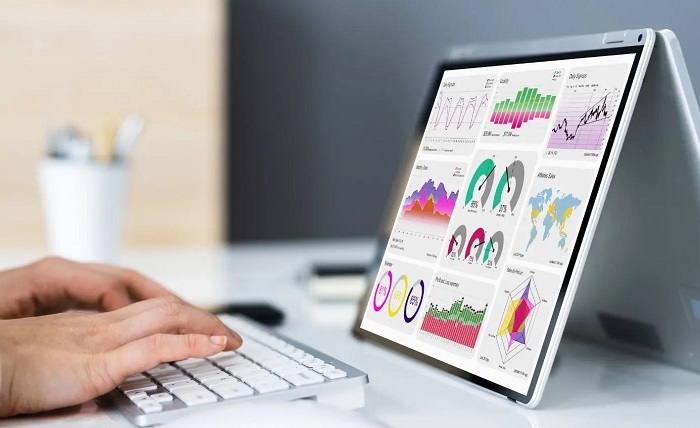
Understanding the Shift to Visual Data Communication
We are continually being bombarded with information in our rapidly expanding digital universe.The most common form of digital data communication is emails, long text based messages, and instant messages that are used to share information, ideas, and different sets of data. They are often so long or complex that individuals either do not understand them or lose interest.
Data visualisation is an effective way to empower business communications by streamlining ideas. Visual data communicates information using different tools such as charts, graphs, and diagrams. It enables organisations to effectively communicate large amounts of complex information by transforming it into a format that is easy to understand.
The Advantages of Visual Data Interpretation for Businesses
In today’s highly digitised ecosystem where remote working, learning, and other activities are accessed online, visual data communication is essential for businesses. It is an effective and simple way to share complex information in a format that is easy for viewers to understand. In the past several years, visual communication strategies have risen in popularity due to their effectiveness and are now being widely adopted by many businesses.
Case Studies: Successful Implementation of Visual Data
Visual data is now playing a key role in the success of different sectors. Companies are using visual data such as graphs, plots, charts, maps, and animations to present and analyse data in a simple format to convey complex ideas that can be easily digested and understood by different audiences.
Healthcare organisations often use visual data to analyse different aspects of their operations such as potential risks and outcomes of treatments for their patients, clinical research, patient behaviour, and pharmaceutical information. Visual data was particularly useful during the covid-19 pandemic enabling healthcare professionals to analyse the spread of the virus as well as identifying areas of high risk and the resources that were available to help combat the spread and aid patients that were infected with the virus by directing them to the closest healthcare facility available.
Retail companies use visual data to study the behaviour of their customers across different demographics. By better understanding the needs of their customers, retail companies can anticipate the desires of their customers and meet their expectations. Visual data is also used to create forward charts that show anticipated changes in customer demands in future months and years and tailor their business plans accordingly.
Hospitality uses data visualisation to identify different trends in the industry and base their decisions on predictions of what may take place in the foreseeable future so that they can plan accordingly to meet demands and keep their prices competitive as well as spot any strengths and weaknesses that need to be addressed to ensure that they offer an exceptional customer experience.
Finance uses visual data to follow market trends, perform more efficiently and set achievable goals in order to offer better products and services. It is also an important way of presenting statistics and data to stockholders in a manner that is easy to access and understand.
Communication Tools and Techniques for Effective Visual Data Representation
Creating effective data representation can be achieved through the use of different types of software communication tools. Humans process visual data much faster than textual information. Being able to visualise relationships, patterns, and trends and how they are connected to each other is best represented by using line graphs and scatter plots that identify where there are correlations with the data set. Giving the data context such as current economic conditions or long term trends will help viewers better understand the information.
The Role of Visual Storytelling in Data Communication
Visual storytelling is an effective way of communicating accurate data that has been carefully analysed so that audiences can see the full picture of what is being presented. The narrative is either written or verbal and explains the visual data that is presented through the use of visual cues such as graphs, charts, diagrams, videos, and pictures that bring the story to life and makes it easier to communicate ideas, needs, and offer recommendations to an audience.
The use of visual communication in digital marketing strategies such as info graphics, videos, illustrations, and diagrams is an effective and precise method that can be used to communicate key points. It has proven very successful when engaging global audiences on platforms such as social media leading to an increase in rates of conversion.
Challenges and Solutions in Adopting Visual Data Communication Practices
There are several challenges that must be addressed when adopting visual data communication practices.
Lack of customisation due to limited availability of customisation options available with some tools that are a hindrance when trying to create presentations that accurately depict preferences and unique requirements of each user. It is essential that creators have access to dashboards that can be customised to tailor the presentation to their specific target audience to ensure information is effectively communicated and understood.
Too much data to analyse is a common issue where analysts find themselves struggling to decipher key information with vast quantities of data. Being able to sift through the data and identify crucial information and trends that might otherwise be missed is crucial.
Integration with existing systems is essential and businesses need to use visualisation tools that create seamless flows of data that blend with existing software offering solutions that adapt to existing systems.
Security is always a concern especially when data that is being presented is sensitive. It is essential that such information is securely handled and essential to integrate robust security measures such as encryption and user access to ensure data compliance with data protection regulations and prevent unauthorised access.
Enjoy Visually Compelling Game Play At Casino Days
If you enjoy game play that is visually compelling then you should visit the vibrant lobby at Casino Days and immerse yourself into the dynamic universe of online gaming that features beautiful visual designs and exhilarating game play. The modern streamlined sleek purple colour scheme on the platform is the gateway to more than 6,000 games that can all be played for real money and are adapted to fit any screen size; from a desktop PC to a smartphone without a degradation of quality or speed of delivery which means that every gaming experience is unparalleled.
Enjoy classic table games, live casino game shows, live Teen Patti, crash games, and compelling video slots that offer dynamic game play and vibrant visual experiences such as the bright sweet filled universe of Sweet Bonanza or the fiery mythological world of 9 Masks of Fire. Whatever your gaming preference is, there is a game for you to enjoy at Casino Days.
All games are sourced by top tier software providers such as Spribe, Evolution, and Bombay Live that offer a combination of exceptional gaming and aesthetically pleasing visual effects that can be enjoyed by opening a player account in a few simple clicks. Pay a deposit in the currency of your choice once the account is approved and do not forget to choose one of the generous welcome bonuses before you start your gaming adventure.
The player experience is a top priority at Casino Days. Enjoy an authentic casino experience from the comfort of your home or on the go with the assurance that all of your personal sensitive data and financial transactions are securely protected by robust firewalls, continuous fraud monitoring, and SSL encryption. Enjoy fun and secure gaming 24/7 and enjoy the Casino Days difference, the preferred destination of Indian gamers.
Future Trends: Innovations and Developments in Visual Data Communication
AI is already proving to be an effective tool in gathering and analysing massive amounts of data. In the past analysing data has fallen on the shoulders of data analysts who often struggled to sift through endless reams of information. Now AI can take the drudgery out of data analysis by creating algorithms that can highlight key information and transform them into visual communications that are appealing and feature charts, infographics, and graphs that are narrative based, personalised, and adapted to the interests of the target audience. This will free up vital time so that businesses can focus on using the data to its highest potential.