There is something oddly calming about tracing lines between islands on a map. The Aegean and Atlantic suddenly stop being blue emptiness and turn into networks of routes, stories and small decisions: where to linger, where to rush, which horizon to chase next. Island-hopping is less about ticking off destinations and more about finding a rhythm that matches the sea.
On some long crossings, people pass the time scrolling through messages or watching short videos, while others might sneak in a quick round of live casino super sic bo before returning to the view of empty water and distant silhouettes. Yet once the ferry draws near a harbor, attention shifts back to the physical world: the color of the houses, the contour of the hills, the way the port seems sleepy or frenetic. This tension between movement and pause, screen and shoreline, is at the heart of modern island-hopping.
Mapping the Arcs: Aegean and Atlantic
When people think of European islands, they often picture one very specific place: a famous sunset, a crowded viewpoint, a stretch of sand. Itineraries, however, are built on relationships rather than isolated images. The Cyclades in the Aegean and the Canaries in the Atlantic each form coherent arcs, linked by ferry routes, shared histories and subtle differences between neighbors.
In the Cyclades, the distances between islands are relatively short, and connections are frequent in high season. This encourages a restless style of travel: two nights here, three nights there, with quick crossings in between. In the Canaries, islands sit farther apart, and the sea can feel wilder, inviting longer stays on each stop and a slightly slower tempo. Analytically, the question is not which archipelago is “better,” but which pattern suits the kind of journey you want to make.
Cyclades: Short Hops and Shifting Moods
The Cyclades are often associated with bright, whitewashed villages and dry, rugged landscapes. From a planning perspective, what stands out is how dramatically the mood can shift from island to island despite visual similarities. One may be introspective and quiet, with a single main village and a handful of tavernas; another feels busy and extroverted, built around nightlife and dense waterfronts.
Because ferries are so central here, the timetable becomes part of the traveler’s mental map. Early-morning departures demand quiet evenings; late-night arrivals change how you experience a place on your first day. The risk with such accessible connections is that people move too quickly, collecting islands like souvenirs. A more reflective approach treats each stop as a small study in local geography, economy and tradition rather than just another backdrop.
Seasonality is equally important. Shoulder months can bring gentler temperatures and more space to breathe, but also reduced services and occasional cancellations. Those on tighter budgets often accept a bit of unpredictability in exchange for lower prices and fewer crowds, while others may prefer to pay more for the relative security and energy of high season.
Beyond the Aegean: Other Mediterranean Chains
Although the Cyclades often dominate conversations about island-hopping, the wider region offers parallel experiences. Other groups in the Mediterranean present different combinations of distance, culture and infrastructure. Some chains encourage compact itineraries within a small radius; others lend themselves to longer arcs that brush against different coastlines and languages.
Looking at these alternatives from an analytical angle highlights how island-hopping is not a single fixed pattern but a flexible strategy. You might combine well-known destinations with lesser-visited neighbors, using the latter as places to recover from the intensity of the former. The ferry still acts as a thread, but the emphasis shifts from “seeing everything” to building contrast into your route.
The Canaries: Volcanic Landscapes and Deep Stays
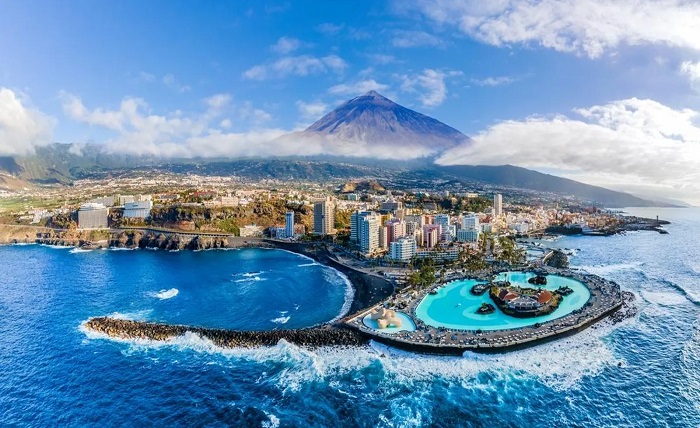
Moving out into the Atlantic, the Canary Islands offer a distinct experience. Volcanic terrain, varied microclimates and dramatic coastlines give each island a strong personality. Here the distances between main ports are greater, and crossings can feel more like minor voyages than simple commutes. This encourages a different rhythm: choose one or two bases and use day trips or short overnights to explore nearby corners.
From a practical standpoint, the Canaries work well for travelers who prefer to unpack less often. You might stay a week on one island, exploring interior villages and coastal paths, then shift to another for a contrasting environment—perhaps a greener, mistier landscape or a quieter, more rural atmosphere. The emphasis falls less on speed and more on depth: returning to the same café, noticing how the light changes on a particular ridge, slowly understanding how local life adapts to the wind and ocean.
Climate also shapes itineraries. Mild winters attract visitors looking to escape colder parts of Europe, which means certain months feel busy even outside the traditional summer holiday. Prices, crowd levels and the balance between international visitors and local routines all vary with the calendar.
Designing a Thoughtful Island-Hopping Plan
Whether you are sketching routes through the Cyclades, the Canaries or both, a few principles help keep an itinerary thoughtful rather than frantic.
First, identify your “anchor” islands—the places where you are willing to spend more nights and build a relationship with the surroundings. Then add a limited number of shorter visits to nearby islands that offer contrast in size, landscape or mood. This structure gives your journey both stability and variety.
Second, decide how much uncertainty you can tolerate. Booking tickets and rooms well in advance will reduce stress but also restrict spontaneity. Leaving gaps allows you to change course based on local advice or weather forecasts, at the cost of occasional logistical puzzles. There is no universally correct choice; the key is aligning expectations with personality.
Third, pay attention to what happens between islands, not just at each destination. Ports, ferries and waiting areas form their own small world of routines, snacks and conversations. The way luggage is handled, the tone of announcements and the smell of diesel or saltwater all contribute to the experience. These in-between moments are often where you notice how locals perceive the sea: as a working environment rather than a romantic backdrop.
Beyond the Postcard: Everyday Life Between Shores
Ultimately, island-hopping is not just about chasing sunsets or collecting photographs of harbors. It becomes a way of observing how communities live with distance, isolation and connection. On some islands, tourism dominates; on others, fishing, agriculture or local administration still set the daily rhythm. The presence or absence of schools, hospitals and regular cargo boats quietly shapes what is possible for residents.
For travelers willing to look beyond the surface, this awareness adds depth to every itinerary. A short ferry ride is no longer merely a scenic detour but a reminder of how goods, people and stories move across the water every day. From the sun-bleached steps of a Cycladic village to the dark, volcanic soil of a Canary hillside, each stop becomes a small chapter in a larger narrative of adaptation and exchange.
Seen in this light, island-hopping from the Cyclades to the Canaries is less a list of beaches and more a journey through the ways people inhabit the sea’s edge—improvising routes, building harbors, and learning to live with both the generosity and unpredictability of the water that separates and connects them.