Tax compliance is one of those business functions that nobody can afford to overlook. While it may not always be exciting, it directly impacts your organization’s financial stability and credibility. Under the GST system, even a small mismatch in tax data can lead to delays, blocked Input Tax Credits (ITC), or penalties. Unfortunately, manual processes often leave room for such errors, especially when reconciling thousands of invoices. That’s where GST reconciliation software steps in, offering accuracy, automation, and complete peace of mind.
As regulations evolve and data volumes grow, smart reconciliation tools have become an indispensable part of every finance team’s digital toolkit. Let’s dive deeper into how these solutions can protect your business from penalties and compliance risks while simplifying tax management.
Understanding Why Penalties Occur
Before we discuss how automation can help, it’s important to understand where most businesses go wrong. GST penalties usually arise from three main issues: inaccurate data, delayed filings, and mismatched records.
Even small errors—like incorrect invoice numbers or tax rates, can lead to discrepancies between your GSTR-2B and purchase register. When these mismatches remain unresolved, your ITC claims get rejected or adjusted. On top of that, filing returns after the due date invites additional penalties and interest.
Manual reconciliation methods struggle to keep up with these challenges, especially when your business handles a high transaction volume. Automating the process through GST reconciliation software ensures that every number adds up perfectly, helping you stay compliant and penalty-free.
1. The High Cost of Non-Compliance
Many businesses underestimate the financial impact of minor filing errors. When invoices are mismatched or unreported, the GST portal automatically flags inconsistencies. These small mistakes often snowball into larger compliance problems, attracting penalties and scrutiny.
Beyond financial costs, non-compliance can affect vendor relationships and credibility during audits. By implementing an automated system, you can ensure accurate filings on time, every time. The software validates data before submission, reducing the risk of regulatory notices and audit triggers.
2. Automation: Your First Line of Defense
The best way to avoid penalties is to prevent mistakes before they occur. Smart GST reconciliation software acts as your digital safety net. It automatically imports and matches data between GSTR-2B, GSTR-1, and your purchase register. Any discrepancies are instantly highlighted, so your team can fix them before filing.
With real-time validation and system-generated alerts, you’ll always know if something is off. The software doesn’t just detect issues, it prevents them from escalating into compliance breaches.
3. Early Detection of Data Mismatches
One of the most common reasons for penalties is unrecognized mismatches between purchase records and supplier filings. Manually detecting these differences across thousands of invoices is nearly impossible.
Automated reconciliation makes it effortless. The system quickly identifies differences in tax amounts, GSTIN numbers, invoice values, or return statuses. You can then communicate with vendors to correct the issue before your return is due. The faster you catch these mismatches, the lower your risk of penalties.
4. Staying Ahead of Filing Deadlines
Late filings are among the easiest ways to incur penalties under GST. Businesses often delay submissions due to incomplete reconciliation or last-minute corrections. GST reconciliation software eliminates these delays by accelerating the process from start to finish.
Since your data is continuously updated and verified, you’re always prepared for return filing. Many solutions even include automated reminders for upcoming deadlines, ensuring you never miss a due date again.
5. Transparent Audit Trails
If your business ever faces a GST audit, having transparent and traceable records can make a huge difference. Manually compiling audit trails from different spreadsheets and systems is time-consuming and stressful.
Smart reconciliation software keeps detailed logs of every transaction, correction, and adjustment. This makes it easy to demonstrate compliance during audits and respond to any questions from tax authorities with complete confidence.
6. Improved Input Tax Credit Accuracy
Input Tax Credit (ITC) is one of the most valuable aspects of the GST framework, but also one of the most complex to manage. Claiming excess or inaccurate ITC due to unmatched invoices can result in fines or even investigation.
Automated reconciliation ensures your ITC claims are 100% legitimate. The system cross-verifies eligible credits against supplier data, flagging any inconsistencies immediately. This precision helps your business claim the right amount without overstepping compliance boundaries.
7. Strengthening Vendor Compliance
Your vendors play a major role in maintaining your GST accuracy. If they delay filings or make data errors, it impacts your reconciliation too. Rather than chasing them manually, GST reconciliation software simplifies communication.
You can generate supplier-specific mismatch reports and share them instantly. This not only speeds up corrections but also encourages vendors to stay compliant, creating a smoother, more reliable filing process for everyone involved.
8. Data Security and Accuracy at Scale
As businesses grow, managing large volumes of tax data becomes increasingly challenging. Handling such information manually increases the chances of data loss or duplication.
Smart reconciliation platforms ensure your tax records are safe, organized, and easily retrievable. They use secure encryption, role-based permissions, and automatic backups to safeguard your financial data, so your compliance efforts remain both accurate and confidential.
9. Real-Time Monitoring for Better Control
The modern tax environment demands agility. Regulations can change, vendors can delay filings, and internal data can evolve. Relying on periodic manual checks means you might miss critical updates.
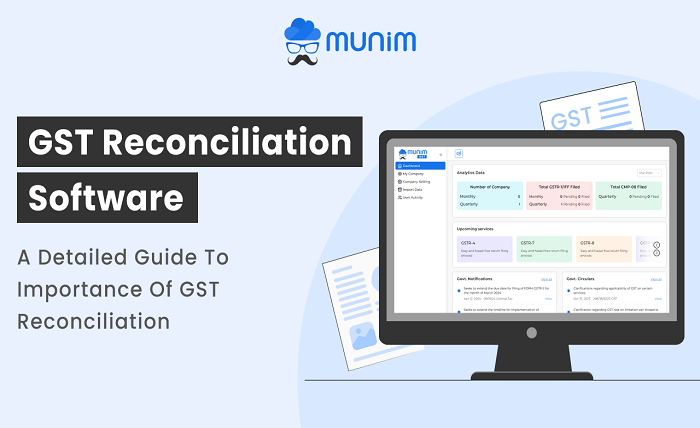
With GST reconciliation software, you gain real-time visibility into your compliance status. The dashboard gives you a live snapshot of invoices, mismatches, filing progress, and ITC utilization. This constant monitoring empowers finance teams to make informed decisions well before deadlines approach.
10. Reducing the Stress of Year-End Closures
Year-end reconciliation is one of the busiest times for finance professionals. The volume of invoices and return adjustments often spikes, increasing the likelihood of oversight.
By maintaining ongoing reconciliation throughout the year, businesses can avoid this bottleneck entirely. Automated systems continuously validate and align records, so when year-end approaches, everything is already in order. This reduces stress, minimizes errors, and ensures that filings go smoothly.
11. Cost Efficiency and Scalability
Penalties and fines may seem small individually, but when repeated, they can heavily impact your bottom line. Additionally, hiring extra staff to manage manual reconciliation can be costly.
Automation delivers scalability and cost efficiency. Once deployed, GST reconciliation software can handle thousands- or even millions- of records without additional manpower. As your business grows, the system scales effortlessly, maintaining compliance without increasing operational costs.
12. The Future of Compliance: Intelligent Automation
The future of tax compliance lies in intelligent, predictive automation. Newer solutions powered by AI and machine learning are capable of identifying potential mismatches even before they occur.
These tools learn from historical data to predict vendor behavior, detect filing delays, and suggest proactive actions. By adopting such systems now, businesses can stay ahead of regulatory changes and maintain flawless compliance as GST evolves.
Conclusion
Avoiding penalties isn’t just about meeting deadlines, it’s about building a smarter, more proactive compliance process. GST reconciliation software helps businesses achieve that by combining automation, accuracy, and intelligence. It ensures that every return filed is error-free, every credit claimed is valid, and every record is audit-ready.
With the right system in place, you don’t just reduce your risk, you enhance efficiency, transparency, and control over your entire tax process.
Modern platforms like AI Accountant make this journey simple and seamless. By integrating real-time data synchronization, automated reconciliation, and intuitive dashboards, it empowers finance teams to stay compliant without stress. For any business serious about accuracy and compliance, investing in a smart reconciliation solution is the smartest step toward a penalty-free future.