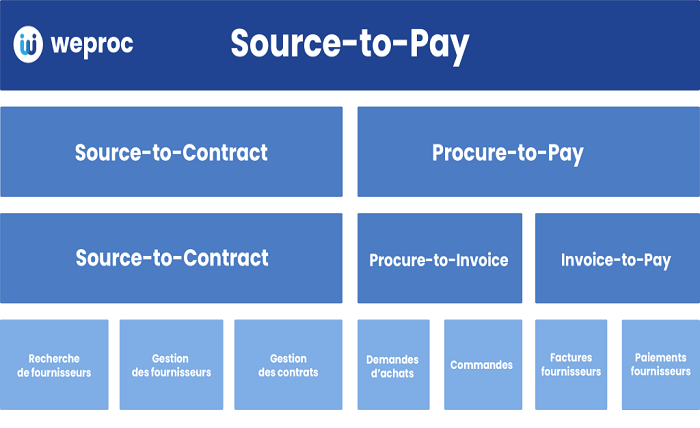
Organizations are being pressured to cut costs, enhance compliance, and enhance control of their expenditures. The trick to these goals is to use the advanced source to pay for software that integrates procurement, sourcing, payments, and supplier management into a single smart ecosystem.
This digital revolution will transcend conventional procurement automation. It brings in a different dimension of transparency, control, and collaboration throughout the supply chain, which transforms procurement from a cost center to a growth and profitability driver.
Knowing the Strengths of Source-to-Pay Software
In its essence, S2P software integrates the procurement process with a whole cycle of activities that include sourcing and negotiating with suppliers up to the receiving and paying of invoices. It is an end-to-end system in which both upstream and downstream are integrated, and hence, transparency and control of all transactions are full.
S2P platforms are more strategic than independent p2p software that mainly automates purchase requests and payments. They allow businesses to source smarter, monitor supplier performance, and find opportunities to save costs with the help of the data.
Through the appropriate solution, the organizations will be able to alleviate the risks associated with suppliers, enhance the level of compliance with the contract, and will be able to make the procurement processes faster and realize the quantifiable savings and operational efficiencies.
The Reason why Businesses are moving to modern Procurement Centers
The conventional procurement system, which usually uses spreadsheets, emails, and disintegrated ERP systems, has silos and slows down the business. Handling of laboratory tests, billing, and discounts manually puts the risk of human error, payment deletion, and discounts being missed.
These challenges can be resolved with modern source to pay software, which offers automation and visibility, as well as analytics. It gives the procurement teams the strength to shift from reactive purchasing to proactive purchasing.
The following are some of the reasons why progressive firms are taking up the modern systems:
- Cohesive Procurement Ecosystem: Teams should be able to use a single platform to conduct sourcing, contracting, purchasing, and payment activities.
- Quickened Procurement: Automated processes make redundant approvals and manual data entry into the system, and shorten the time between a request and payment.
- Enhanced Cost Management: Real-time visibility of spend assists organizations in identifying areas of leaked budgets, performance monitoring, and negotiating more favorably with suppliers.
- Improved Supplier Relationships: Direct access to portals by suppliers to track orders, submit invoices, and communicate with suppliers, eliminating delays and miscommunication.
The driving forces behind value are its key features
A proper source-to-pay software package provides a range of options that will help to optimize efficiency and transparency throughout the procurement process.
- Intelligent Vendor Management and Sourcing.
The sourcing module makes it easy to identify, evaluate, and onboard vendors. The Procurement teams would be able to invite suppliers to digital RFQs and e-auctions, compare proposals in real-time, and make decisions supported by data.
- Lifecycle Management of Contracts.
Contracts are also digitized and kept in a safe place, and are in compliance and easy to access. Automated notifications assist users with the tracking of renewal, expiry dates, and significant performance requirements.
- Procurement Automation
With the automation of AI, the creation of requisitions, the approval of purchase orders, and paying bills becomes smooth. The system will ensure that all purchases are made according to company policy and that manual bottlenecks are eradicated.
- Invoice-to-Pay Efficiency
In comparison with an old legacy finance system, a new p2p software automates the process of invoice validation and payment approvals to minimize errors and expedite cash flow. ERP and financial integration with accounting tools make the organization financially consistent.
The way to improve Visibility with Source-to-Pay Software
The successful procurement management revolves around visibility. When it is absent, the businesses are inefficient and risk their supply chains. Modern source to pay software provides insights in real time in the entire procurement lifecycle. Interactive boards gather information about budgets, purchases, invoices, and payments, so that teams can see problems immediately.
This openness is also transferred to supplier performance in that the leaders of the procurement can analyze the reliability, prices, and risk. These revelations make the supplier relations strategic and data-driven.
Besides, the installation of p2p software into the S2P system makes the finance and procurement quadrant perfectly aligned. The matching of invoices, the payment process, and the tracking of costs enhances accountability and promotes efficiency in an operation.
The Strategic and Financial Benefits
Using a new source-to-pay software system could provide both short-term and long-term rewards:
- Lower Procurement Costs: Automation reduces administrative costs and errors, resulting in quantifiable savings.
- Greater Compliance: Each transaction is subject to pre-established rules and policies, and the purchase requirements are fulfilled.
- Better Cash Flow: The time to process and approve invoices is better, thus liquidity management is improved.
- Improved Supplier Relationships: Open communication and performance monitoring establish trust and long-term relationships.
- Better Nimbleness: Procurement is more preemptive with AI and analytics, as organizations can respond fast to changes in the market.
When p2p software causes procurement and finance groups to work in sync, operational effectiveness becomes a reality, but so does strategic empowerment.
The Right Source-to-Pay Platform
The correct choice of the solution that will be used would demand a clear picture of what the business needs and would need in order to scale. When considering the possible platforms, organizations must consider:
- Ease of Integration: Is it capable of integrating with your current ERP, CRM, and accounting systems?
- User Experience: Does it have an intuitive interface to procurement and supplier users?
- Customization Alternatives: Is it possible to customize workflows, approval chains and reports according to your company policies?
- Data Security: Does the platform practice optimal data protection and compliance?
- Analytics and Artificial Intelligence: Does it automatically create insights to help in making decisions?
A fully contemporary source to pay for a software system must provide more than automation; it ought to facilitate continuous enhancement by being seen, being clever, and communicating.
The Trends in Procurement Digitization in the Future
The evolution of procurement is fast due to the emergence of artificial intelligence, predictive analytics and machine learning. Software that is future-ready in reference to p2p solutions is already incorporating these technologies to offer predictive sourcing recommendations, automate supplier risk notifications, and self-optimizing workflows.
The future of procurement is in platforms that are not only tools but intelligent ecosystems that enable businesses to innovate, collaborate and prosper in a data-driven world.
Conclusion
The transformation that is required in procurement to realize visibility and sustainable savings is not about digitization. Modern source to pay software links all the processes and stakeholders into a single smart system. Through the adoption of high-tech p2p software, organizations will have quicker procurement cycles, increased compliance, quantifiable savings, improved collaborations with suppliers, automate their workflows, and have access to real-time insights to make smarter and data-driven decisions.
To companies that are willing to take their procurement strategy to the next level, investigate superior platforms that merge intelligence, integration, and innovation, such as the one presented by Procol, a reputable pioneer of electronic procurement change. The platform Procol will help streamline the sourcing and buying processes by automating multiple processes with AI, providing real-time spend analytics, and freely integrating with existing ERP systems.